The Authentic Voice: Bringing Handwritten Warmth to Digital Projects
In a world saturated with crisp, geometric sans serifs and rigid corporate serif fonts, the human element often gets lost in the noise. We spend hours scrolling through feeds that feel algorithmically generated, missing that tangible connection that comes from a handwritten note. This is exactly the gap that Journals was designed to fill. It isn’t just another script typeface; it is a bridge between the convenience of digital design and the intimacy of personal penmanship. As designers and creators, our goal is often to evoke a specific emotion or reaction. When you need to bypass the viewer's analytical brain and speak directly to their heart, typography is your most powerful tool.
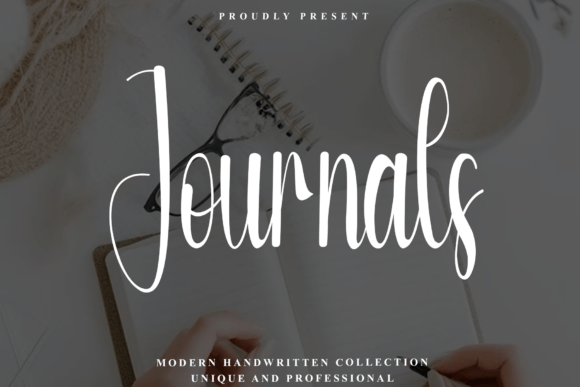
Journals is characterized by its fluid, rhythmic motion. It avoids the stiffness of traditional calligraphy while steering clear of the chaotic look of grunge fonts. Instead, it sits in that perfect middle ground of modern, handwritten elegance. The defining features are its elongated ascenders and descenders—the tall loops on letters like 'h', 'l', 'y', and 'g'—which give the text a vertical, airy energy. Furthermore, the "bouncy" baseline is crucial here. Unlike fonts that sit perfectly straight on an invisible line, Journals mimics the natural, uneven rhythm of a hand moving quickly across paper. This slight imperfection is what makes it feel authentic. It creates a visual flow that guides the eye, making even short sentences feel like a cohesive, flowing thought rather than isolated symbols.
Strategic Applications for Modern Creators
Understanding the visual personality of a font is only half the battle; knowing where to deploy it is where the strategy lies. Because Journals possesses such a distinct voice, it functions best as a display font or an accent typeface. It is not designed for long-form body text, but rather for moments of emphasis and impact. For lifestyle branding, this typeface is a game-changer. Imagine a boutique coffee roaster or a sustainable skincare line; these brands rely on storytelling and values. Using Journals for your logo design elements or tagline immediately signals that your brand is approachable, artisanal, and cares about the details.
In the realm of digital planners and stationery, the utility of this font is self-evident. It mimics the look of actual ink, making digital organization tools feel less like software and more like a cherished notebook. For wedding invitations and event stationery, the font offers a sophisticated alternative to hand-lettering services. It provides that bespoke look without the associated cost, maintaining a professional standard that high-end events require.
When we look at social media graphics, the scroll-stopping power of a script font like Journals cannot be overstated. In a grid of square images and bold sans serifs, a flowing, handwritten quote creates a moment of pause. It is particularly effective for overlaying on photography, provided there is enough contrast. The font’s delicate loops allow light and air into the design, preventing it from feeling heavy or cluttered. It is also an excellent choice for packaging design, specifically for product descriptions or "from the maker" notes on the back of a box, adding a layer of human touch to a commercial product.
Mastering Font Pairings and Visual Hierarchy
One of the most common pitfalls in using a creative font like Journals is overuse. If an entire website or brochure is written in a bouncy script, readability plummets, and the design feels chaotic. The key to successful integration is contrast. To create a strong visual hierarchy, pair Journals with a clean, neutral typeface. A geometric sans serif font works beautifully for headers and sub-headers, providing a stable foundation that allows the script to shine. Alternatively, a classic serif font can create a lovely, editorial contrast—think of a fashion magazine layout where the elegant headers bridge the gap between the imagery and the dense body copy.
When testing your font pairing, pay close attention to x-heights. You want the lowercase letters of your supporting font to visually align with the x-height of Journals so the text doesn't look disjointed. Furthermore, consider the spacing. Because Journals features those long loops, you may need to adjust the leading (line spacing) to prevent the ascenders from crashing into the descenders of the line above. A little extra breathing room allows the rhythm of the font to be appreciated fully.
Practical Considerations for Professional Use
Before integrating any new design assets into your workflow, a professional assessment is required. First, consider the medium. While Journals excels in digital environments like web headers and Instagram stories, web design implementation requires careful coding to ensure the font loads correctly and renders well across different browsers. For print, ensure you are using high-resolution settings; the fine strokes of a handwritten font can sometimes disappear if printed at low quality or on textured, absorbent paper.
Licensing is another critical factor. If you are a small business owner using this for a client’s logo design or a product line, you must ensure you have the appropriate commercial font license. Most premium fonts come with different tiers—desktop licenses for print, and web licenses for digital use. Always read the End User License Agreement (EULA) to understand the scope of usage, especially if you are creating templates for resale.
Finally, review the full character set. A high-quality premium font like Journals often includes alternates, ligatures, and swashes. These are variations of specific letters that can be swapped out to avoid repetition—for example, ensuring that two 'o's in a word don't look identical, which is a dead giveaway of digital text. Utilizing these OpenType features is what separates amateur typography from professional design. It adds that final layer of polish that makes the text look truly hand-lettered, reinforcing the brand identity you are trying to build.