Why Genty is the Bold Script Font Your Brand Needs
Finding a typeface that feels both personal and professional is a common challenge for designers and business owners. You want something with character, but it also needs to be functional. This is where Genty enters the conversation. It’s a modern script font that balances a bold, confident presence with the warmth of a handwritten style. The result is a typeface that feels approachable yet strong, making it a versatile tool for a wide range of creative projects.
The Personality Behind the Typeface
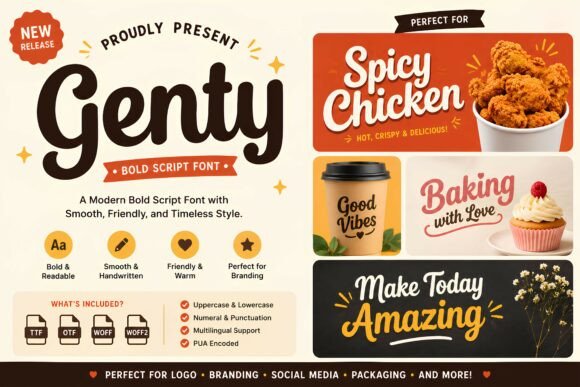
At its core, Genty is a display font with a distinct personality. Its smooth, flowing strokes mimic natural handwriting, but there’s nothing timid about it. The letterforms are bold and well-defined, giving them a sense of strength and reliability. This combination means it doesn’t just blend into the background; it makes a statement. The overall aesthetic is friendly and modern, yet it carries enough weight to feel substantial. Think of it as the confident, creative friend who’s also incredibly dependable.
This personality makes Genty a powerful tool for shaping brand perception. When used in a logo or on packaging, it communicates a brand that is both innovative and trustworthy. It avoids the sometimes-impersonal feel of a standard sans serif font while offering more impact than a delicate script. The font’s character can help a business appear more human, approachable, and passionate about its craft.
Where Genty Truly Shines: Practical Applications
The real value of any creative font is in its application. Genty excels in projects where you need to grab attention and convey a specific mood. For logo design, it provides a strong foundation that’s memorable and scalable. In branding materials—from business cards to letterheads—it adds a consistent, stylish touch that reinforces brand identity.
Consider its use in packaging design, especially for artisanal foods, coffee brands, or boutique products. The handwritten quality of Genty suggests a personal touch, craftsmanship, and care, which can significantly influence a customer’s first impression. It’s equally effective for restaurant menus, where it can create a warm and inviting atmosphere.
Digital spaces are another natural home for this font. It performs exceptionally well in social media graphics, helping posts stand out in a crowded feed. The bold strokes ensure readability even at smaller sizes on a screen. For bloggers and content creators, using Genty in featured images or pull quotes can add visual interest and break up text-heavy layouts. It’s also a great choice for t-shirt designs, posters, and merchandise, where a strong, stylistic font is key to the design’s appeal.
Pairing and Professional Use
One of the marks of a well-designed typeface is its ability to work with others. Genty pairs beautifully with a range of fonts. For a clean, modern look, try combining it with a simple, geometric sans serif font. The contrast between the bold script and the clean lines creates a balanced visual hierarchy. For a more classic or editorial feel, it can also be paired with a serif font, where the script adds a contemporary flourish to the traditional structure.
When evaluating if Genty is right for your project, consider the context. It’s perfect for headlines, logos, and short bursts of text where its personality can be fully appreciated. For long-form body copy, a more neutral font would be a better choice for readability. Always test the font in your specific design mockups to see how it interacts with your color palette, imagery, and other typographic elements.
A Note on Licensing and Styles
As a premium font, Genty typically comes with a commercial license, which is essential for any professional project—whether it’s for a client or your own business. Before purchasing, review the license details to ensure it covers your intended use, especially for digital products like templates or merchandise sold in bulk.
Check what styles and weights are included with the font family. Many professional script fonts offer multiple versions, such as a regular, bold, or italic style, and sometimes include alternates or ligatures. These extras provide more design flexibility, allowing you to fine-tune the look to perfectly match your project’s needs. Taking the time to explore these options will help you get the most out of this versatile design asset.