Why Caption Handwriting Might Be Your Next Design Secret Weapon
There's a particular kind of design problem that comes up constantly: you need something to feel personal, authentic, and warm, but it also has to be polished enough for a brand or a professional publication. It's the gap between a child's crayon note and a corporate sans serif. This is precisely the space where Caption Handwriting operates, and it does so with a surprising amount of versatility.
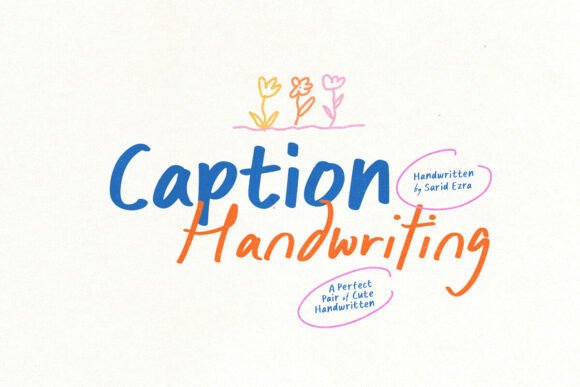
At its heart, Caption Handwriting is a handwritten font that doesn't try to be anything else. It has a bold, regular style that gives it immediate presence and a confident personality. The letterforms are clear and legible, avoiding the overly casual or chaotic look that can make some script fonts feel unprofessional. Alongside this is an italic signature script, which introduces a more fluid, personal, and almost signature-like quality. This pairing—a sturdy, cute handwritten base with an elegant, flowing accent—is what makes it a font duo with real practical value.
Finding Its Place: Beyond Cute Quotes
While the description mentions "cute quotes," limiting Caption Handwriting to that category would be a mistake. Its true strength lies in its ability to inject personality without sacrificing clarity. Think about the needs of a small bakery: their logo needs to feel homemade and inviting, but the menu board must be easy to read from a few feet away. The bold regular style of Caption Handwriting works beautifully for the logo and headings, while a clean sans serif font can handle the menu items. The italic script could then add a special touch to "Today's Special" or a thank you note on packaging.
For entrepreneurs and content creators, this typeface is a powerful tool for brand identity. It can form the core of a visual language for a personal blog, a podcast, or a social media-focused brand. Imagine Instagram story highlights with titles set in the bold style, creating a consistent and recognizable look. The script variant is perfect for signing off a blog post or adding a handwritten note to a digital product, like a planner PDF or a recipe card. This kind of thoughtful use builds a connection with the audience, making the brand feel more human and approachable.
The Practicalities of Working With a Handwritten Font
Choosing any creative font, especially a handwritten font, requires a bit of strategic thinking. Caption Handwriting is a premium font, which typically means it comes with a more refined character set, better kerning, and often a commercial license suitable for professional work. Here’s how to evaluate and use it effectively:
- Project Fit: This font shines in projects where a human touch is central to the message. It’s excellent for logo design for lifestyle brands, packaging design for artisan goods, editorial design for magazines or blogs with a personal angle, and social media graphics that need to stand out in a feed. It might be less suitable for dense body copy in a technical manual or a formal corporate report.
- Font Pairing: The key to using Caption Handwriting professionally is pairing it wisely. Because it has a strong personality, it pairs best with neutral, clean fonts. A simple, geometric sans serif font for body text or a classic, understated serif font can provide a beautiful contrast. This creates a clear visual hierarchy, where the handwritten elements grab attention for headlines or key points, and the paired font ensures the rest of the content remains highly readable.
- Readability and Testing: Always test the font in context. How does the bold style look at 24pt on a website header versus at 14pt on a business card? Is the italic script legible enough for a short phrase on a product label, or should it be reserved for a decorative flourish? The fact that it supports multi language characters is a significant plus for brands with an international audience, ensuring consistency across different markets.
Making It Work for You
The real value of a font like Caption Handwriting is in how it solves design challenges. A marketer can use it to create email headers that feel more personal than a standard template. A crafter can use it to design unique wedding invitations or party supplies that feel custom-made. A publisher might use the script style for chapter titles in a lifestyle book to add warmth.
When you incorporate it into your design assets, think about consistency. Use the bold style for all your main headings across your website, presentations, and printed materials. Use the script for all your "personal touch" moments, like signatures, quotes, or special callouts. This consistency builds recognition and makes your overall brand identity more cohesive and professional, even while using a font that feels spontaneous.
In the world of modern typography, where clean minimalism often dominates, a well-crafted handwritten font offers a refreshing alternative. Caption Handwriting isn't trying to replace a workhorse sans serif font or a elegant serif font. Instead, it offers a specific, valuable tool for when you need to communicate with authenticity, charm, and a distinct human voice. It’s about finding the right moment to let a little personality shine through, and doing so with a style that’s both cute and confidently bold.