Exploring Raissa: A Handwritten Script Font for Modern Creatives
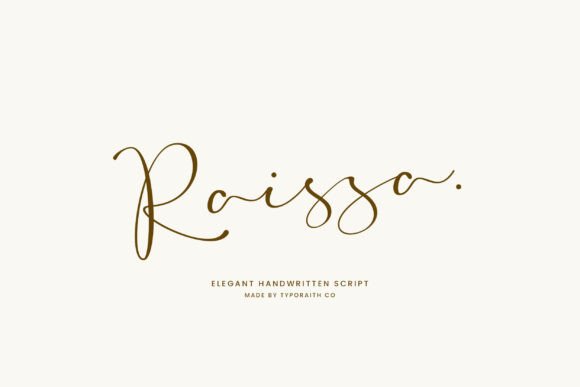
Finding a typeface that feels genuinely personal, yet polished enough for professional work, can be a real challenge. Too often, script fonts either look overly formal and stiff or too casual and messy. Raissa strikes a different balance. It’s a beautifully crafted handwritten script font that blends elegance with a modern, natural flow. Designed with smooth curves and graceful strokes, it delivers a luxurious and personal touch to any design project. Each letter is thoughtfully created to mimic authentic handwriting, enhanced with stylish swashes and fluid connections—making your text feel warm, refined, and effortlessly sophisticated. For designers, entrepreneurs, and creators seeking to add a feminine, classy, and modern touch to their work, Raissa presents a compelling option.
More Than Just Pretty Letters: The Personality of Raissa
At its core, Raissa is a premium font that prioritizes authenticity. It avoids the overly rigid, digitized look that plagues many script typefaces. Instead, the letterforms flow with a relaxed rhythm, as if penned by a confident hand. The swashes and ligatures aren’t just decorative afterthoughts; they are integral to its character, allowing for seamless connections between letters. This creates a sense of movement and cohesion across a line of text. The overall personality is one of understated luxury—it doesn’t shout for attention but rather invites the viewer in with its quiet confidence and warmth. This makes it far more than a simple handwritten font; it’s a tool for injecting genuine emotion and sophistication into a design.
Where Does Raissa Shine? Practical Applications for This Script Font
Understanding a font’s strengths helps you deploy it effectively. Raissa excels in contexts where a personal, human touch elevates the message. Think beyond the obvious. While it’s a natural fit for wedding invitations and greeting cards, its real power lies in strategic branding and marketing applications.
- Brand Identity & Logo Design: For businesses in the lifestyle, beauty, wellness, boutique retail, or artisanal food spaces, Raissa can become the cornerstone of a brand identity. It works beautifully as the primary logotype or as a supporting accent font. Paired with a clean sans serif font for body copy, it creates a hierarchy that feels both approachable and high-end. Imagine it on a coffee shop menu, a skincare product label, or the logo for a creative studio—it immediately communicates care and quality.
- Editorial & Publishing Design: In editorial design, this creative font is perfect for chapter titles, pull quotes, or section headers in magazines, lookbooks, and blogs. It draws the eye and adds a layer of visual interest that standard serif fonts or sans serifs might lack. For authors and self-publishers, it can lend a distinctive, personal feel to book covers or title pages, especially in genres like romance, memoir, or contemporary fiction.
- Digital & Social Media: The clean, connected nature of Raissa makes it surprisingly legible at smaller sizes on screens, provided it’s used for headings and key phrases. It’s an excellent choice for social media graphics, Instagram quotes, website hero images, and email newsletter headers. It helps a brand stand out in a crowded feed with a cohesive and recognizable visual voice.
- Packaging & Marketing Collateral: Packaging design is where Raissa truly shines. Think about the handwritten-style text on artisanal chocolate boxes, candle labels, or cosmetic tubes. It suggests a product made with attention to detail. Similarly, it elevates business cards, thank-you notes, and promotional flyers, turning routine marketing into a more engaging experience.
Making It Work: Guidance for Using Raissa Effectively
Adopting any new design asset requires a thoughtful approach. Here’s how to integrate Raissa into your workflow for maximum impact.
Evaluating Project Fit and Readability
First, ask if the project’s tone aligns with the font’s personality. Raissa conveys femininity, elegance, and modernity. It may not be the best choice for a corporate law firm’s annual report or a tech startup’s primary UI text. For those contexts, a sturdy sans serif or a traditional serif might be more appropriate. Always prioritize readability. Use Raissa for headlines, logos, and short bursts of text where its style can be appreciated without hindering comprehension. Avoid setting long paragraphs with it; the connected script style can become tiring to read in large blocks.
Mastering Font Pairing and Hierarchy
The true skill in using a display font like Raissa lies in pairing it effectively. The goal is contrast and balance. Pair it with a simple, geometric sans serif font (like Montserrat, Poppins, or Lato) for body text. This creates a clear visual hierarchy: Raissa captures attention and sets the emotional tone, while the sans serif provides clean, easy-to-read information. You can also pair it with a classic serif font for a more traditional, yet still personal, feel. Experiment with scale and weight to see what combinations feel most harmonious for your specific project.
Leveraging OpenType Features and Licensing
Before purchasing or using any commercial font, always check its feature set. A quality script font like Raissa often includes alternate characters, stylistic sets, and additional swashes accessible through OpenType features in software like Adobe Illustrator or Photoshop. These extras allow you to customize words and avoid repetitive letter shapes, making your text look even more authentic. Finally, understand the licensing. Ensure the font’s license covers your intended use—whether for a client’s logo design, merchandise, or digital products. Respecting font licensing is a mark of a professional and protects your work.
In a landscape saturated with generic typefaces, Raissa offers a distinct voice. It’s a versatile modern typography tool that, when used thoughtfully, can significantly enhance the emotional resonance and perceived quality of a design. By focusing on its strengths in branding, editorial, and packaging, and by pairing it with complementary typefaces, you can harness its elegant, handwritten charm to create work that feels both personal and polished. It’s a valuable addition to any designer’s or creator’s toolkit for projects that demand a touch of refined warmth.